LIMBUN Image
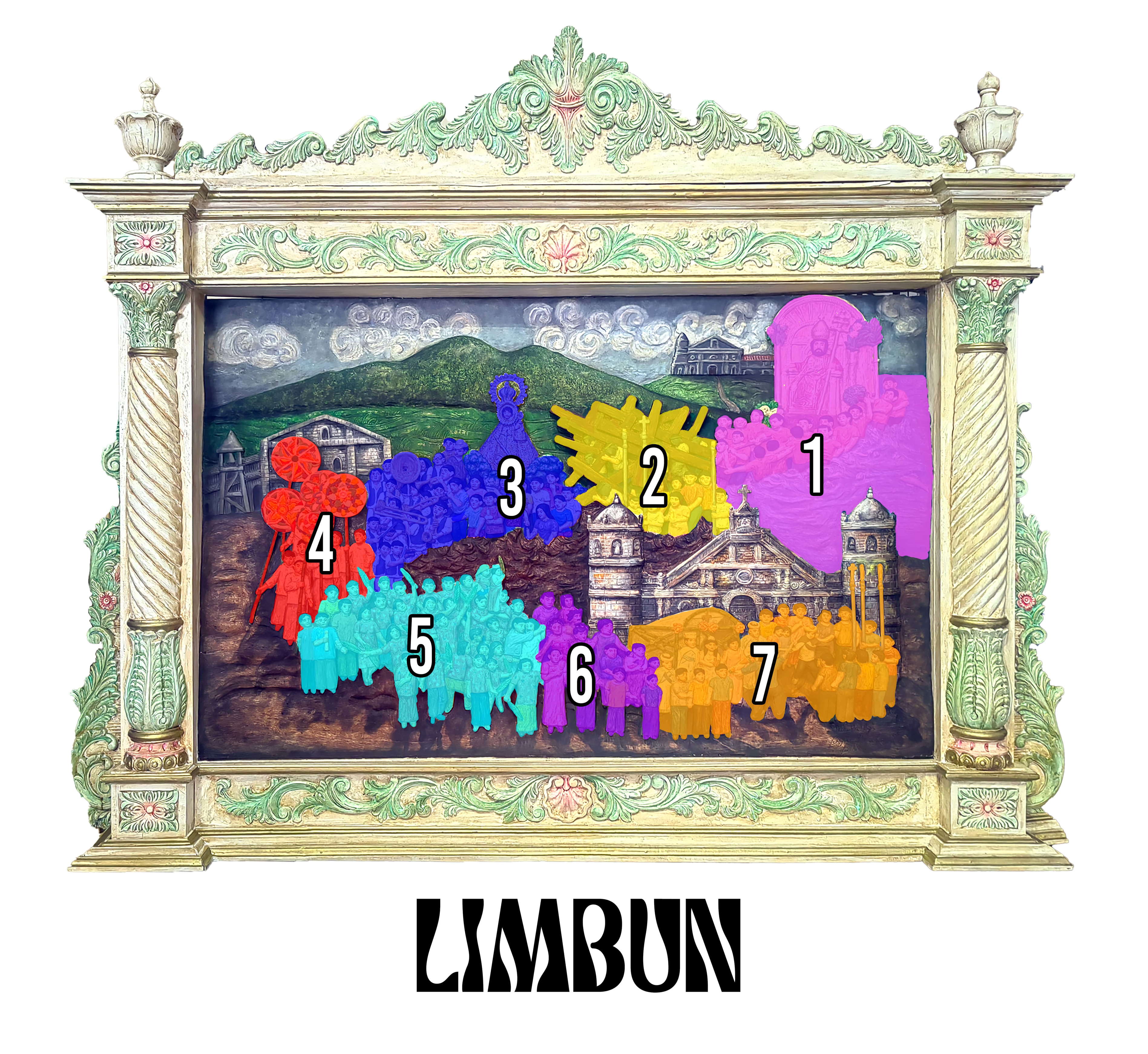
1. LIBAD 2. Sasmuan Biyernis Santu 3. La Naval 4. Lubenas 5. Kuraldal 6. Aguman Sanduk 7. Sabat Santacruzan

                    <hr>
                    <h1>1. LIBAD</h1>

                <p>
                    Pampanga's own fluvial procession has swimmers manually pulling the pagoda across the river and devotees being rewarded with a spectacular shower of food from the riverbanks, like manna from heaven.<br><br>

                    <b>WHERE IT IS STILL PRACTICED</b>: Apalit, Sasmuan, Minalin, Macabebe.<br><br>
                    
                    <b>WHEN IT OCCURS</b>: In Apalit, where the biggest and most elaborate celebration occurs on the Rio Grande (Pampanga River), the first libad begins on June 28 and the last one occurs on June 30. In Sasmuan, small libad are held by the barangays and sitios located along the whole stretch of the river Dalan Bapor (Guagua-Pasac River) during their respective fiesta; in Minalin, the libad is held during the town's fiesta on the second Sunday of May, along the San Francisco River; and in Macabebe, specifically on the river island of Pulu, a libad around the two-kilometer island is held on the feast of Nuestra Señora de Candelaria.<br><br>
                    
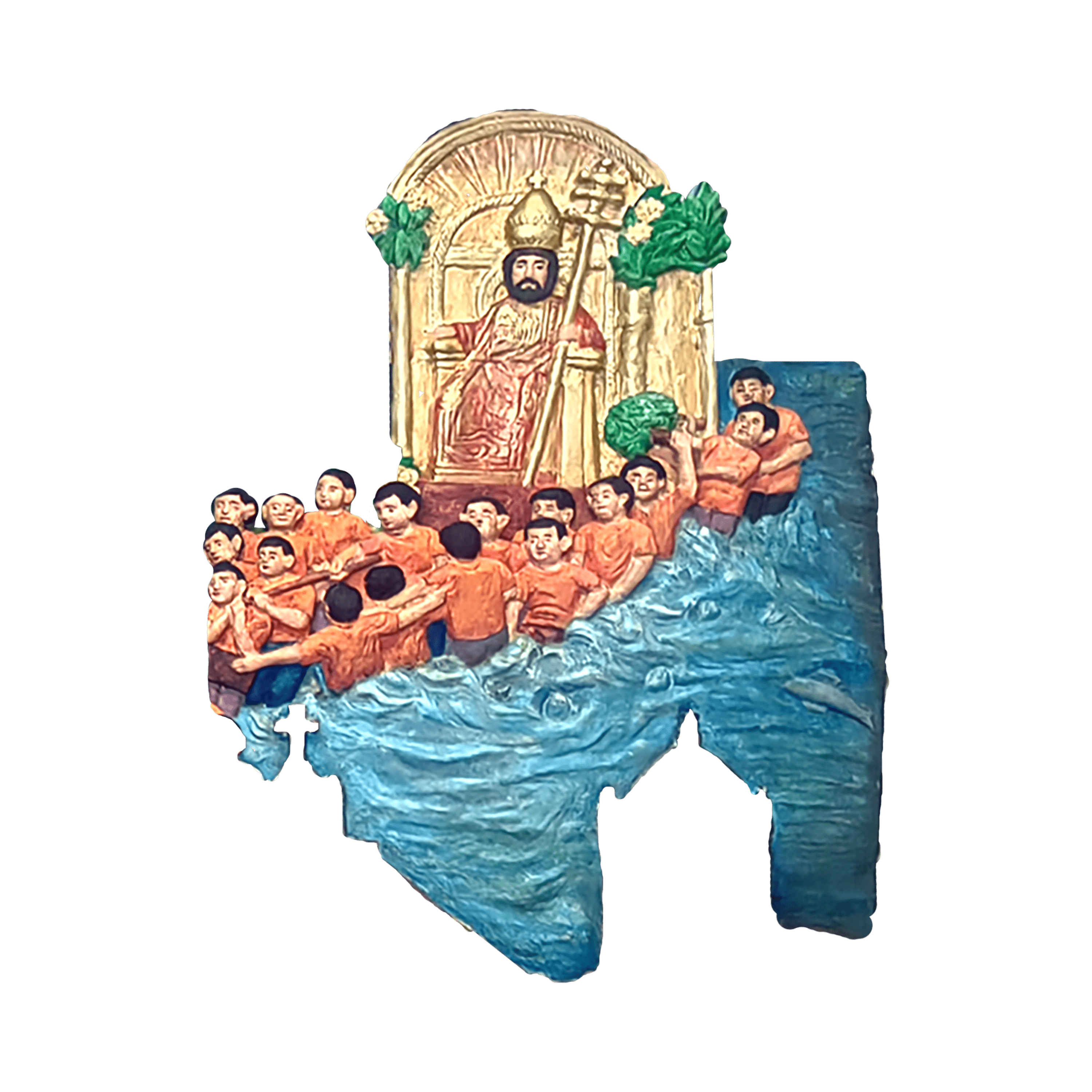
                    <b>WHAT IT IS</b>: Libad is the generic term that refers to a fluvial procession held in honor of a patron saint; in Apalit, it is in honor of St. Peter, whom locals intimately refer to as Apung Iru. Two big libad are held to accompany the passage of the venerated image of Apung Iru, which is an Arnedo family heirloom but which is lent to the parish church on the feast of St. Peter on June 29. The first libad is held the day before, when the image “travels” to the Apalit church; the second, more boisterous, libad occurs the day after the fiesta, when the image “returns home.” On June 28, after the 9 AM Mass,, the ivory-faced image of Apung Iru leaves its chapel in Brgy. Capalangan, and is borne in procession by the Knights of St. Peter, who wear bright orange shirts. After the procession on land, the image is brought to the banks of a tributary leading to the Pampanga River in Brgy. Sulipan and put on a pituya (two or three small boats tied together), which takes it to the pagoda (barge decorated and made to look like a multi-tiered house). The Pampanga River Control System (PRCS) and later, the Department of Public Works and Highways (DPWH) regularly lent the barges on which the pagoda is mounted to prevent a repeat of the tragedy in a similar festival in Bocaue, Bulacan.<br><br>
                    
                    Meanwhile, hundreds of boats, many of which are festooned with images associated with St. Peter (cock, fish, etc.) and bearing brass bands and wildly cheering revelers, accompany the barge as it negotiates a seven-kilometer stretch of the Pampanga River. Organizers have instituted an inter-barangay competition of boat decorations to liven up the celebration. The barge lands in Brgy. San Juan, in a port under the North Expressway bridge, from where Apung Iru is led in procession again towards the Apalit parish church, where it stays during the town fiesta. On June 30, the image of Apung Iru is taken from the church after a Mass at 8 AM, to the same port in San Juan where another Mass is held; then, another libad commences as the saint is returned to Capalangan. It is in this last libad where thousands of devotees on both sides of the Pampanga River keep pace with the progress of the pagoda; there are groups who wave leaves and flowers as they dance to the strains of kuraldal from another brass band on land. There are also those who climb up the roof of their houses so they can throw apples, canned goods, boiled eggs, etc. on the people on the pagoda or on the boats accompanying the pagoda, presumably to ease the hunger pangs of devotees who have skipped lunch to follow the image, or, as a local superstition goes, to feed St. Peter who comes disguised as a hungry old fisherman during his feast day. The shower of food is both breathtaking and environmentally unsound, because the stuff that doesn't land on the boats stays on the water for days. The Knights of St. Peter, swimming in the river's murky water, pull the barge with a thick abaca rope to make sure it doesn't tilt and also to guide it towards the river banks where clusters of devotees wave and splash in the water. Somewhere in Brgy. Tabuyoc, where the pagoda has been assembled earlier, two sets of Knights perform a push-and-pull ritual with the pagoda, so that the image stays longer in the vicinity. In Brgy. Sulipan, the image is taken from the barge and borne on the shoulders of another set of the Knights of St. Peter, for a procession to bring it back to its chapel in Capalangan where it will stay until the next fiesta. Thousands of devotees, many of them dancing the kuraldal, follow Apung Iru in this last leg of the procession, many of them shouting “Viva Apung Iru!”.<br><br>
                    
               </p>

1. LIBAD

Pampanga's own fluvial procession has swimmers manually pulling the pagoda across the river and devotees being rewarded with a spectacular shower of food from the riverbanks, like manna from heaven.

WHERE IT IS STILL PRACTICED: Apalit, Sasmuan, Minalin, Macabebe.

WHEN IT OCCURS: In Apalit, where the biggest and most elaborate celebration occurs on the Rio Grande (Pampanga River), the first libad begins on June 28 and the last one occurs on June 30. In Sasmuan, small libad are held by the barangays and sitios located along the whole stretch of the river Dalan Bapor (Guagua-Pasac River) during their respective fiesta; in Minalin, the libad is held during the town's fiesta on the second Sunday of May, along the San Francisco River; and in Macabebe, specifically on the river island of Pulu, a libad around the two-kilometer island is held on the feast of Nuestra Señora de Candelaria.

WHAT IT IS: Libad is the generic term that refers to a fluvial procession held in honor of a patron saint; in Apalit, it is in honor of St. Peter, whom locals intimately refer to as Apung Iru. Two big libad are held to accompany the passage of the venerated image of Apung Iru, which is an Arnedo family heirloom but which is lent to the parish church on the feast of St. Peter on June 29. The first libad is held the day before, when the image “travels” to the Apalit church; the second, more boisterous, libad occurs the day after the fiesta, when the image “returns home.” On June 28, after the 9 AM Mass,, the ivory-faced image of Apung Iru leaves its chapel in Brgy. Capalangan, and is borne in procession by the Knights of St. Peter, who wear bright orange shirts. After the procession on land, the image is brought to the banks of a tributary leading to the Pampanga River in Brgy. Sulipan and put on a pituya (two or three small boats tied together), which takes it to the pagoda (barge decorated and made to look like a multi-tiered house). The Pampanga River Control System (PRCS) and later, the Department of Public Works and Highways (DPWH) regularly lent the barges on which the pagoda is mounted to prevent a repeat of the tragedy in a similar festival in Bocaue, Bulacan.

Meanwhile, hundreds of boats, many of which are festooned with images associated with St. Peter (cock, fish, etc.) and bearing brass bands and wildly cheering revelers, accompany the barge as it negotiates a seven-kilometer stretch of the Pampanga River. Organizers have instituted an inter-barangay competition of boat decorations to liven up the celebration. The barge lands in Brgy. San Juan, in a port under the North Expressway bridge, from where Apung Iru is led in procession again towards the Apalit parish church, where it stays during the town fiesta. On June 30, the image of Apung Iru is taken from the church after a Mass at 8 AM, to the same port in San Juan where another Mass is held; then, another libad commences as the saint is returned to Capalangan. It is in this last libad where thousands of devotees on both sides of the Pampanga River keep pace with the progress of the pagoda; there are groups who wave leaves and flowers as they dance to the strains of kuraldal from another brass band on land. There are also those who climb up the roof of their houses so they can throw apples, canned goods, boiled eggs, etc. on the people on the pagoda or on the boats accompanying the pagoda, presumably to ease the hunger pangs of devotees who have skipped lunch to follow the image, or, as a local superstition goes, to feed St. Peter who comes disguised as a hungry old fisherman during his feast day. The shower of food is both breathtaking and environmentally unsound, because the stuff that doesn't land on the boats stays on the water for days. The Knights of St. Peter, swimming in the river's murky water, pull the barge with a thick abaca rope to make sure it doesn't tilt and also to guide it towards the river banks where clusters of devotees wave and splash in the water. Somewhere in Brgy. Tabuyoc, where the pagoda has been assembled earlier, two sets of Knights perform a push-and-pull ritual with the pagoda, so that the image stays longer in the vicinity. In Brgy. Sulipan, the image is taken from the barge and borne on the shoulders of another set of the Knights of St. Peter, for a procession to bring it back to its chapel in Capalangan where it will stay until the next fiesta. Thousands of devotees, many of them dancing the kuraldal, follow Apung Iru in this last leg of the procession, many of them shouting “Viva Apung Iru!”.


                    <hr>
                    <h1>2. Sasmuan Biyernis Santu</h1>

                    <p>
                        GOOD FRIDAY Today is the day when thousands of Kapampangan men (and some women) perform their individual and group rituals of blood-letting and self-immolation all across Pampanga and Tarlac. In Bamban, penitents in uniform Nazarene costumes and customized crosses converge at the grotto at sunrise and proceed by batches to Mabalacat, where they all converge at the church patio, creating a scene straight out of a Cecil B. de Mille epic. In Sta. Maria, Macabebe, even doctors and professionals bend down to have their bare backs wounded by a local manabad before they flagellate themselves in the streets. In Magalang and Arayat, penitents crawl like worms on the dirt road, rubbing and bruising their skin and covering their bodies with dust. As noon approaches, various groups reenact the Passion of Christ in street performances: in Pampang, Angeles City, thugs and market stevedores portray Roman soldiers mounted on horses; in Madapdap Resettlement, Mabalacat and in Batasan, Candaba (now administratively part of Bulacan Province), men pursue and beat up a cross-bearer with such ferocity and realism to qualify it for reality TV's Extreme Challenge—both road shows end in an actual crucifixion. But all roads lead to San Pedro Cutud and Sta. Lucia, both in San Fernando, where brave the heat and the kilometric walk to the local calvary.<br><br>
    
                        As the orgy of pain and violence subsides in the late afternoon, thousands of Kapampangans converge in church patios for the long Good Friday procession; in Bacolor, San Fernando, Sto. Tomas, Mabalacat, Sta. Rita and Guagua, the image of the grieving Blessed Mother is followed by a choir singing Stabat Mater accompanied by violins; as the procession passes the Rodriguez Mansion along Consunji Street in San Fernando, members of the family throw petals from the balcony. But the highlight of the Good Friday procession is the hearse bearing the Apung Mamacalulu, also known as Sto. Entierro (“The Interred Christ”). By this time, flagellants have gone home to soothe their aching backs, except in Sasmuan, where the Good Friday procession is tail-ended by another grim procession of penitents who carry crosses as big as electric posts—the only place in Pampanga where orthodox rituals mix with folk practice.<br><br>
    
        
                   </p>

2. Sasmuan Biyernis Santu

GOOD FRIDAY Today is the day when thousands of Kapampangan men (and some women) perform their individual and group rituals of blood-letting and self-immolation all across Pampanga and Tarlac. In Bamban, penitents in uniform Nazarene costumes and customized crosses converge at the grotto at sunrise and proceed by batches to Mabalacat, where they all converge at the church patio, creating a scene straight out of a Cecil B. de Mille epic. In Sta. Maria, Macabebe, even doctors and professionals bend down to have their bare backs wounded by a local manabad before they flagellate themselves in the streets. In Magalang and Arayat, penitents crawl like worms on the dirt road, rubbing and bruising their skin and covering their bodies with dust. As noon approaches, various groups reenact the Passion of Christ in street performances: in Pampang, Angeles City, thugs and market stevedores portray Roman soldiers mounted on horses; in Madapdap Resettlement, Mabalacat and in Batasan, Candaba (now administratively part of Bulacan Province), men pursue and beat up a cross-bearer with such ferocity and realism to qualify it for reality TV's Extreme Challenge—both road shows end in an actual crucifixion. But all roads lead to San Pedro Cutud and Sta. Lucia, both in San Fernando, where brave the heat and the kilometric walk to the local calvary.

As the orgy of pain and violence subsides in the late afternoon, thousands of Kapampangans converge in church patios for the long Good Friday procession; in Bacolor, San Fernando, Sto. Tomas, Mabalacat, Sta. Rita and Guagua, the image of the grieving Blessed Mother is followed by a choir singing Stabat Mater accompanied by violins; as the procession passes the Rodriguez Mansion along Consunji Street in San Fernando, members of the family throw petals from the balcony. But the highlight of the Good Friday procession is the hearse bearing the Apung Mamacalulu, also known as Sto. Entierro (“The Interred Christ”). By this time, flagellants have gone home to soothe their aching backs, except in Sasmuan, where the Good Friday procession is tail-ended by another grim procession of penitents who carry crosses as big as electric posts—the only place in Pampanga where orthodox rituals mix with folk practice.


                    <hr>
                                
                    <h1>4. Lubenas</h1>

                    <p>
                        It's another folk tradition forced to turn to commerce and tourism after being disowned by a religion that has outgrown its usefulness.<br><br>
    
                        <b>WHERE IT STILL SURVIVES</b>: Mabalacat, Magalang, Angeles, San Fernando, Mexico, Concepcion, Capas.<br><br>
                        
                        <b>WHEN IT OCCURS</b>: Nine evenings before Christmas (December 16-24), the same period for simbang bengi (dawn Masses); lubenas is the corruption of novena, meaning “nine”.<br><br>
                        
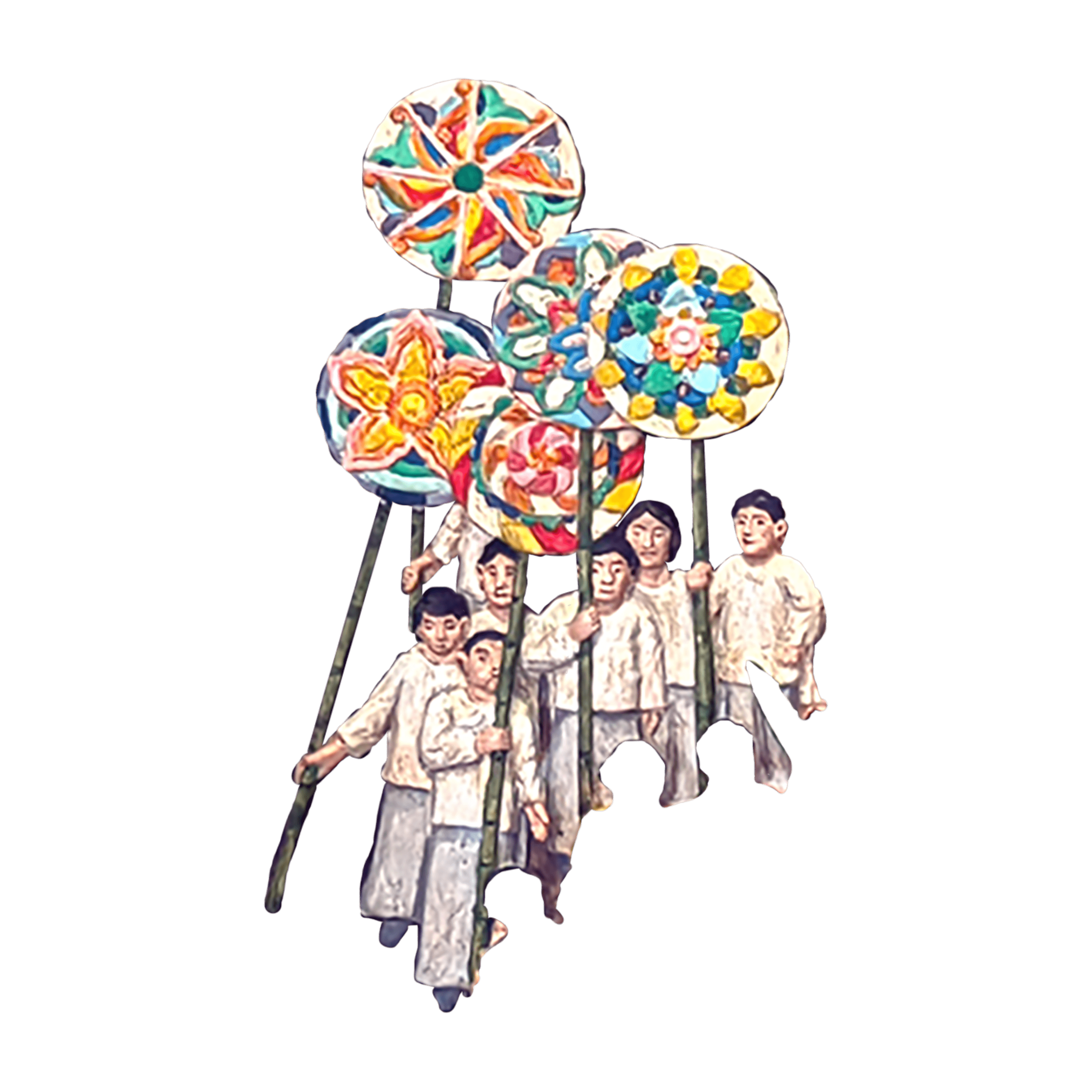
                        <b>WHAT IT IS</b>: It is a procession on land (limbun, to differentiate it from libad which is a procession on water) where two rows of lanterns mounted on bamboo poles accompany the andas (shoulder-borne carriage) or carroza (wheeled carriage) bearing the patron saint's image. The lanterns, five to seven of them on each row, are carried by boys or men, sometimes women; except in Mexico where only one row of lanterns precede the santo. (The number of lanterns depends on what the barangay can afford.) At the head of the procession is a lantern in the shape of a cross, and behind it is another lantern in the shape of a fish, with movable fins, mouth and tail. Right behind the santo is a solitary lantern that is larger than the rest. All the lanterns in a lubenas are made of paper and bamboo frames and are illuminated from within, either by candlelight or electric light. (Today, it is only Brgys. Cutcut and San Jose in Angeles City that still include the fish lantern; only one man, 70- year-old Eulogio Catahan or Apung Eloy of Cutcut still makes fish lanterns, and only one household, in Brgy. San Nicolas, still makes the peculiar white lanterns of Angeles, quite different from the multi-colored lanterns of San Fernando.) Angeles lanterns have tails while Mabalacat lanterns generally are tailless. Marching behind the carroza is the local choir singing “Dios te Salve,” usually accompanied by a brass band or a lone guitarist.<br><br>
                        
                        According to historian Mariano Henson, the two most popular versions of “Dios te Salve” were arranged by Prof. Higino Herrera and Prof. Antonio G. Dizon. In Mexico town, the singers pause at intervals to pray the rosary. This practice is probably a vestige from the Spanish times when Kapampangans had a peculiar way of doing a procession: they stopped at certain points to watch the reenactment of the life of whoever saint was being honored in the procession. From December 16 to December 24, the town's barangays hold simultaneous lantern processions in their respective areas; on Christmas Eve, right before the Midnight Mass, lantern processions from these barangays converge in the church patio, creating a wonderland of hundreds of lanterns of various shapes and colors. This event is called maitinis (probably from the word matins).<br><br>


                   </p>

4. Lubenas

It's another folk tradition forced to turn to commerce and tourism after being disowned by a religion that has outgrown its usefulness.

WHERE IT STILL SURVIVES: Mabalacat, Magalang, Angeles, San Fernando, Mexico, Concepcion, Capas.

WHEN IT OCCURS: Nine evenings before Christmas (December 16-24), the same period for simbang bengi (dawn Masses); lubenas is the corruption of novena, meaning “nine”.

WHAT IT IS: It is a procession on land (limbun, to differentiate it from libad which is a procession on water) where two rows of lanterns mounted on bamboo poles accompany the andas (shoulder-borne carriage) or carroza (wheeled carriage) bearing the patron saint's image. The lanterns, five to seven of them on each row, are carried by boys or men, sometimes women; except in Mexico where only one row of lanterns precede the santo. (The number of lanterns depends on what the barangay can afford.) At the head of the procession is a lantern in the shape of a cross, and behind it is another lantern in the shape of a fish, with movable fins, mouth and tail. Right behind the santo is a solitary lantern that is larger than the rest. All the lanterns in a lubenas are made of paper and bamboo frames and are illuminated from within, either by candlelight or electric light. (Today, it is only Brgys. Cutcut and San Jose in Angeles City that still include the fish lantern; only one man, 70- year-old Eulogio Catahan or Apung Eloy of Cutcut still makes fish lanterns, and only one household, in Brgy. San Nicolas, still makes the peculiar white lanterns of Angeles, quite different from the multi-colored lanterns of San Fernando.) Angeles lanterns have tails while Mabalacat lanterns generally are tailless. Marching behind the carroza is the local choir singing “Dios te Salve,” usually accompanied by a brass band or a lone guitarist.

According to historian Mariano Henson, the two most popular versions of “Dios te Salve” were arranged by Prof. Higino Herrera and Prof. Antonio G. Dizon. In Mexico town, the singers pause at intervals to pray the rosary. This practice is probably a vestige from the Spanish times when Kapampangans had a peculiar way of doing a procession: they stopped at certain points to watch the reenactment of the life of whoever saint was being honored in the procession. From December 16 to December 24, the town's barangays hold simultaneous lantern processions in their respective areas; on Christmas Eve, right before the Midnight Mass, lantern processions from these barangays converge in the church patio, creating a wonderland of hundreds of lanterns of various shapes and colors. This event is called maitinis (probably from the word matins).


                    <hr>
                    <h1>5. Kuraldal</h1>

                    <p>
                        Pilgrimage to a small fishing village brings hope to childless couples, who must dance this wild dance all night long on the feast of St. Lucy.<br><br>
    
                       <b>WHERE IT STILL SURVIVES</b>: Sasmuan, Lubao, Macabebe, Betis.<br><br>
                        
                       <b>WHEN IT OCCURS</b>: While Sasmuan marks its town fiesta on the feast of its patron saint, St. Lucy, on December 13, kuraldal is held with great fervor in the week starting January 6, which used to be the feast of the Three Kings (recently stricken out from the reformed Church calendar). The only plausible explanation for the date is the connection between light, which is the meaning of the saint's name, and the Star of Bethlehem which guided the Three Kings. In Sta. Cruz, Lubao, the residents dance the kuraldal on the barrio's fiesta on May 3, towards the end of the procession in front of the chapel along the Olongapo-Gapan Road. In Macabebe, barrios and sitios celebrating their respective fiestas in May perform their small-scale kuraldal. In Betis, a group of 24 dancers and 2 instructors, all residents of Sta. Ursula, dance their own version of kuraldal with swordfights on July 25 (feast of St. James) and for 9 consecutive days before the feast day, when devotees fetch the saint's image from the hermana's residence.<br><br>
                        
                       <b>WHAT IT IS</b>  : Kuraldal is a dance in honor of St. Lucy (although in other places, Kapampangans do the kuraldal in honor of their respective saints). It is performed by devotees who make a pilgrimage to Sasmuan during the town's fiesta (December 13) and with increasing intensity all the way to kuraldal season in January. Dancers cry “Viva Santa Lucia! Puera sakit!” (“Away with ailments!”); petitions range from pregnancy to winning the lotto to passing the board exam The mother of all kuraldal, the Sasmuan kuraldal, starts in the morning of January 6, after the 8 AM Mass. A short-distance procession of the image of St. Lucy, between the parish church and the Sta. Lucia barangay chapel, along the narrow portion of the dalan paglimbunan (procession route), is marked by street dancing. The next day, January 7, a group of women devotees, wearing buri hats and dresses with pink-and-white floral designs, dance door-to-door for donations. The climax is on the evening of January 10, when the Archbishop of San Fernando, the Sasmuan parish priest and several other priests concelebrate Mass on a makeshift stage in a square behind the Sta. Lucia barangay chapel.<br><br>
                        
                        After the Mass, two brass bands, one in front of the makeshift stage and the other in front of the chapel, signal the start of the kuraldal. The crowd is sometimes so thick that devotees only manage to sway or jump instead of dance. The dancing lasts until after midnight. Meanwhile, devotees clamber up the makeshift stage to pick up flowers and leaves from the bouquets and rub their handkerchiefs on the image of St. Lucy. This wooden image is a smaller version of the January 6 image, but probably much older and definitely not made in Spain, judging from the elongated earlobes similar to Buddha statues, according to church heritage expert Prof. Regalado Trota Jose. Kuraldal may be the Kapampangans' answer to Obando, but it is wilder. Some dancers have been observed to dance non-stop for several hours, bathed in sweat, with faces white as sheet and eyes rolling up as if in a trance. In Betis, the 24 dancers are expected to pass on the duty of performing the kuraldal to their children, in the same way that they inherited it from their respective fathers.<br><br>
     
                   </p>

5. Kuraldal

Pilgrimage to a small fishing village brings hope to childless couples, who must dance this wild dance all night long on the feast of St. Lucy.

WHERE IT STILL SURVIVES: Sasmuan, Lubao, Macabebe, Betis.

WHEN IT OCCURS: While Sasmuan marks its town fiesta on the feast of its patron saint, St. Lucy, on December 13, kuraldal is held with great fervor in the week starting January 6, which used to be the feast of the Three Kings (recently stricken out from the reformed Church calendar). The only plausible explanation for the date is the connection between light, which is the meaning of the saint's name, and the Star of Bethlehem which guided the Three Kings. In Sta. Cruz, Lubao, the residents dance the kuraldal on the barrio's fiesta on May 3, towards the end of the procession in front of the chapel along the Olongapo-Gapan Road. In Macabebe, barrios and sitios celebrating their respective fiestas in May perform their small-scale kuraldal. In Betis, a group of 24 dancers and 2 instructors, all residents of Sta. Ursula, dance their own version of kuraldal with swordfights on July 25 (feast of St. James) and for 9 consecutive days before the feast day, when devotees fetch the saint's image from the hermana's residence.

WHAT IT IS : Kuraldal is a dance in honor of St. Lucy (although in other places, Kapampangans do the kuraldal in honor of their respective saints). It is performed by devotees who make a pilgrimage to Sasmuan during the town's fiesta (December 13) and with increasing intensity all the way to kuraldal season in January. Dancers cry “Viva Santa Lucia! Puera sakit!” (“Away with ailments!”); petitions range from pregnancy to winning the lotto to passing the board exam The mother of all kuraldal, the Sasmuan kuraldal, starts in the morning of January 6, after the 8 AM Mass. A short-distance procession of the image of St. Lucy, between the parish church and the Sta. Lucia barangay chapel, along the narrow portion of the dalan paglimbunan (procession route), is marked by street dancing. The next day, January 7, a group of women devotees, wearing buri hats and dresses with pink-and-white floral designs, dance door-to-door for donations. The climax is on the evening of January 10, when the Archbishop of San Fernando, the Sasmuan parish priest and several other priests concelebrate Mass on a makeshift stage in a square behind the Sta. Lucia barangay chapel.

After the Mass, two brass bands, one in front of the makeshift stage and the other in front of the chapel, signal the start of the kuraldal. The crowd is sometimes so thick that devotees only manage to sway or jump instead of dance. The dancing lasts until after midnight. Meanwhile, devotees clamber up the makeshift stage to pick up flowers and leaves from the bouquets and rub their handkerchiefs on the image of St. Lucy. This wooden image is a smaller version of the January 6 image, but probably much older and definitely not made in Spain, judging from the elongated earlobes similar to Buddha statues, according to church heritage expert Prof. Regalado Trota Jose. Kuraldal may be the Kapampangans' answer to Obando, but it is wilder. Some dancers have been observed to dance non-stop for several hours, bathed in sweat, with faces white as sheet and eyes rolling up as if in a trance. In Betis, the 24 dancers are expected to pass on the duty of performing the kuraldal to their children, in the same way that they inherited it from their respective fathers.


                    <hr>
                    <h1>6. Aguman Sanduk</h1>

                    <p>
                        Hundreds of farmers and fishermen put on their wives' lipstick and wear their daughters' mini-skirts, every year since 1931, all in the spirit of fun and in defiance of long-cherished Kapampangan values.<br><br>
    
                       <b>WHERE IT STILL SURVIVES</b> : Minalin; a smaller version called Aguman Sensi used to be held in San Antonio, Bacolor until lahar forced the evacuation of the entire village.<br><br>
    
                       <b>WHEN IT OCCURS</b> : In the afternoon of New Year's Day, when most people, including tourists and media men, catch up on lost sleep from the previous night's revelry—which is why Aguman Sanduk is Pampanga's best-kept secret.<br><br>
    
                       <b>WHAT IT IS</b>: Aguman Sanduk, literally “fellowship of the ladle” (Aguman Sensi, on the other hand, means “fellowship of the spatula”) is an annual event held only in Minalin town, where hundreds of boys and men from various barangays pour into the street wearing wigs, make-up and women's clothes. It is Pampanga's own Gay Pride Parade, except that no gays are allowed. It is the menfolk of Minalin—sunburned farmers and fishermen, local doctors and engineers, school boys and neighborhood thugs—who unabashedly parade in the streets around the parish church in full transvestite glory. These days, the celebration has been enhanced by the inclusion of floats representing the barangays of the town; each float features the “ladies” and a number of costumed performers, satirizing conventional women's roles like giving birth, preparing dinner, etc. The float is preceded and followed by more “ladies” doing choreographed dances. After the parade, a short program is held in the church patio to determine the year's Aguman Sanduk Queen, who is the ugliest of the crossdressers. Thus, the “muse” of each competing barangay not only dresses up as a woman but has to look like an ugly woman, which is why Aguman 
                   </p>

6. Aguman Sanduk

Hundreds of farmers and fishermen put on their wives' lipstick and wear their daughters' mini-skirts, every year since 1931, all in the spirit of fun and in defiance of long-cherished Kapampangan values.

WHERE IT STILL SURVIVES : Minalin; a smaller version called Aguman Sensi used to be held in San Antonio, Bacolor until lahar forced the evacuation of the entire village.

WHEN IT OCCURS : In the afternoon of New Year's Day, when most people, including tourists and media men, catch up on lost sleep from the previous night's revelry—which is why Aguman Sanduk is Pampanga's best-kept secret.

WHAT IT IS: Aguman Sanduk, literally “fellowship of the ladle” (Aguman Sensi, on the other hand, means “fellowship of the spatula”) is an annual event held only in Minalin town, where hundreds of boys and men from various barangays pour into the street wearing wigs, make-up and women's clothes. It is Pampanga's own Gay Pride Parade, except that no gays are allowed. It is the menfolk of Minalin—sunburned farmers and fishermen, local doctors and engineers, school boys and neighborhood thugs—who unabashedly parade in the streets around the parish church in full transvestite glory. These days, the celebration has been enhanced by the inclusion of floats representing the barangays of the town; each float features the “ladies” and a number of costumed performers, satirizing conventional women's roles like giving birth, preparing dinner, etc. The float is preceded and followed by more “ladies” doing choreographed dances. After the parade, a short program is held in the church patio to determine the year's Aguman Sanduk Queen, who is the ugliest of the crossdressers. Thus, the “muse” of each competing barangay not only dresses up as a woman but has to look like an ugly woman, which is why Aguman


                    <hr>
                    <h1>7. Sabat Santacruzan</h1>

                    <p>
                        The charming original form of the vastly popular but shamelessly commercialized santacruzan lives on in a small village at the foothills of Mount Pinatubo.<br><br>
    
                       <b>WHERE IT STILL SURVIVES</b> : Sapangbato (Angeles), whose patron saint is the Santa Cruz (Holy Cross), San Fernando and some villages in Concepcion (Tarlac).<br><br>
                        
                       <b>WHEN IT OCCURS</b>: Towards the end of May.<br><br>
                        
                       <b>WHAT IT IS</b>: Also known as Goydo-goydo (after Goy do Borgonia, successor of Constantine), sabat is a version of the santacruzan in which costumed performers interrupt the procession to challenge the sagalas and their consortes to a duel, either through verbal joust or in a swordfight. It is a reenactment of the ambuscades that infidels (Moros) launched on the Crusaders as they returned to Europe after finding the Holy Cross. The santacruzan itself, before it degenerated into a pageant of beauty queens and starlets, used to be a novena procession commemorating the finding (not the search, because Reyna Elena is already holding it!) of the Cross by Empress Helena and her son, Emperor Constantine, in Jerusalem. The basic storyline of the Sapangbato version, which is handwritten on a thick book that resembles a pasyun, begins with Reyna Elena embarking on a search for the Cross and ordering Goy do Borgonia, next in line to her son Emperador Constantino, to repel an attack led by Moro queen Florifis, sister of Prinsipe Arabiano and Prinsipe Turquiano. Goy do Borgonia, however, falls in love with Florifis and is unable to carry out Reyna Elena's order, thus prompting the queen to turn to Emperador Carlo Magno of the Franciang Corte for help. Carlo Magno sends eight of his 12 brave princes (Doce Pares), namely Prinsipe Roldan (the captain), Oliveros, Reynaldos, Conderlos, Goyperos, Montesino, Galalon and Ricarte.<br><br>
                        
                        The Crusade encounters many battles en route to joining Reyna Elena's party; in one battle, Roldan slays Moro prince Clynos and wears his cape. Meanwhile, Reyna Elena and party finally discover the Cross relics on Monte Lebano (Mount Lebanon), and start their victorious journey back to Europe, singing Viva Victoria! They encounter Roldan who is still on his way to the Holy Land and whom they do not recognize because of his borrowed Moro cape and also because they think he's been dead. Reyna Elena asks each of Roldan's princes who also do not recognize him—except Olivares, who confirms Roldan's identity.<br><br>
                        
                        The problem thus settled, the procession resumes until they are ambushed by Prinsipe Arabiano. Goy do Borgonia captures the Arab prince but just then Moro queen Florifis comes to rescue Prinsipe Arabiano, her brother. Being in love with Florifis, Goy do Borgonio requests permission fom Reyna Elena to free Prinsipe Arabiano. Afterwards it is Florifis' other brother, Prinsipe Turquiano, who attacks the procession and is about to succeed in stealing the Cross when Reyna Elena makes an impassioned speech about the meaning of the relics to Christendom. Moved, Prinsipe Turquiano and the Moros are converted.<br><br>
    
                   </p>

7. Sabat Santacruzan

The charming original form of the vastly popular but shamelessly commercialized santacruzan lives on in a small village at the foothills of Mount Pinatubo.

WHERE IT STILL SURVIVES : Sapangbato (Angeles), whose patron saint is the Santa Cruz (Holy Cross), San Fernando and some villages in Concepcion (Tarlac).

WHEN IT OCCURS: Towards the end of May.

WHAT IT IS: Also known as Goydo-goydo (after Goy do Borgonia, successor of Constantine), sabat is a version of the santacruzan in which costumed performers interrupt the procession to challenge the sagalas and their consortes to a duel, either through verbal joust or in a swordfight. It is a reenactment of the ambuscades that infidels (Moros) launched on the Crusaders as they returned to Europe after finding the Holy Cross. The santacruzan itself, before it degenerated into a pageant of beauty queens and starlets, used to be a novena procession commemorating the finding (not the search, because Reyna Elena is already holding it!) of the Cross by Empress Helena and her son, Emperor Constantine, in Jerusalem. The basic storyline of the Sapangbato version, which is handwritten on a thick book that resembles a pasyun, begins with Reyna Elena embarking on a search for the Cross and ordering Goy do Borgonia, next in line to her son Emperador Constantino, to repel an attack led by Moro queen Florifis, sister of Prinsipe Arabiano and Prinsipe Turquiano. Goy do Borgonia, however, falls in love with Florifis and is unable to carry out Reyna Elena's order, thus prompting the queen to turn to Emperador Carlo Magno of the Franciang Corte for help. Carlo Magno sends eight of his 12 brave princes (Doce Pares), namely Prinsipe Roldan (the captain), Oliveros, Reynaldos, Conderlos, Goyperos, Montesino, Galalon and Ricarte.

The Crusade encounters many battles en route to joining Reyna Elena's party; in one battle, Roldan slays Moro prince Clynos and wears his cape. Meanwhile, Reyna Elena and party finally discover the Cross relics on Monte Lebano (Mount Lebanon), and start their victorious journey back to Europe, singing Viva Victoria! They encounter Roldan who is still on his way to the Holy Land and whom they do not recognize because of his borrowed Moro cape and also because they think he's been dead. Reyna Elena asks each of Roldan's princes who also do not recognize him—except Olivares, who confirms Roldan's identity.

The problem thus settled, the procession resumes until they are ambushed by Prinsipe Arabiano. Goy do Borgonia captures the Arab prince but just then Moro queen Florifis comes to rescue Prinsipe Arabiano, her brother. Being in love with Florifis, Goy do Borgonio requests permission fom Reyna Elena to free Prinsipe Arabiano. Afterwards it is Florifis' other brother, Prinsipe Turquiano, who attacks the procession and is about to succeed in stealing the Cross when Reyna Elena makes an impassioned speech about the meaning of the relics to Christendom. Moved, Prinsipe Turquiano and the Moros are converted.